
The bottom line
Substrate identification decides the principle; the principle decides the gauge model. Get this wrong and calibration and verification that follow are pointless.
Three typical costs of a wrong call
A substrate misjudgement does not shift the reading by a few percent — it invalidates the whole conclusion. So the cost of this check is far below the rework and dispute cost of a wrong call.
- Using a magnetic or eddy model on a non-metallic substrate — the gauge gives no response or errors out; measurement cannot proceed.
- Treating austenitic stainless as ferrous — you get an unstable reading that swings with position, not a steady systematic bias, so it cannot be corrected away.
- Ignoring the minimum substrate thickness — the reading is systematically low, and the bias grows as the substrate gets thinner, easily mistaken for “insufficient coating thickness.”
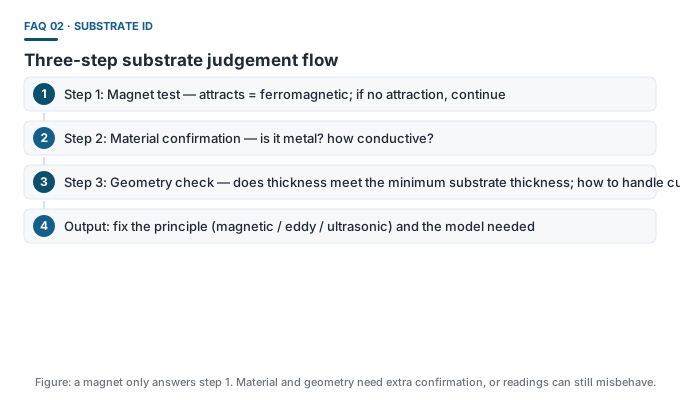
The common thread: the numbers on the display all look normal. That is why substrate identification must be done in three steps — magnet test, material confirmation, geometry check — not by whether the reading looks stable.