
The bottom line
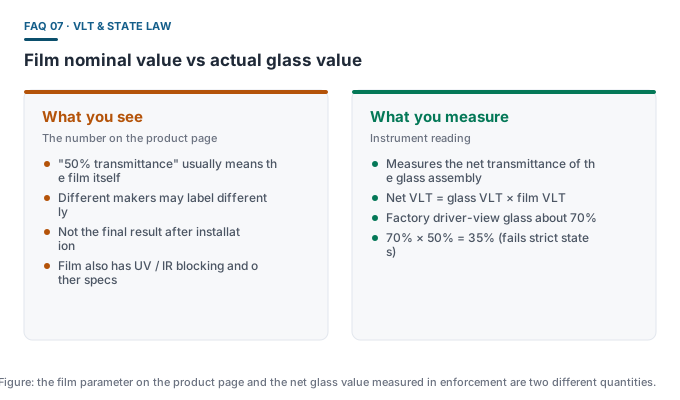
The core fact of tint compliance is one sentence: enforcement measures the glass assembly, not the film. Once you get that, most confusion answers itself.
Three easily missed premises
Three links in the tint-compliance chain are easiest to get wrong; any one error yields a conclusion that diverges from field enforcement.
- The law is state-level, and it changes — the US has no unified federal tint limit; 50 states and Washington DC each legislate, so the same film can be legal in one state and illegal in another; the specific limit follows the current local law text.
- The object measured is the glass assembly — “50% transmittance” on a product page usually means the film itself, while enforcement measures the net transmittance of glass plus film; they are not the same quantity.
- Measurement beats estimation — factory glass baselines differ by model and position. About 70% is a common industry reference, good only for a first estimate; for a precise call, measure the same untinted glass.
For a tint shop, recording and showing the customer the before-and-after measured values is both a compliance self-check and the most direct sales argument.