
The bottom line
This class is unusually simple to judge: if the substrate is neither ferromagnetic nor conductive, ultrasonics is the only path. The difficulty is not selection but coupling condition and capability limits.
The real difficulty of this measurement
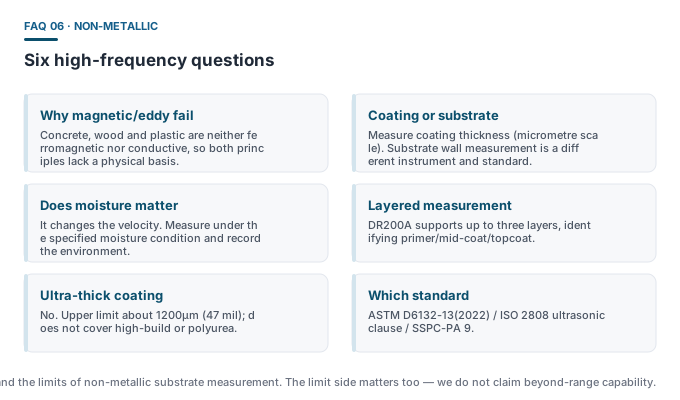
There is no ambiguity in substrate choice — concrete, wood, plastic, glass and fibreglass all rule out magnetic and eddy methods. The real difficulty concentrates on three points: coupling condition, environmental state and capability limits.
- Coupling — echoes in low-acoustic-impedance materials are weak, so probe contact pressure and couplant amount affect reading stability more than on metal; usually average several points.
- Environmental state — moisture changes in concrete and wood shift the velocity, so measure under the specified condition and record the environment and time in the report.
- Capability limit — a portable ultrasonic coating gauge tops out around 1000-1200μm. High-build coatings and polyurea-type ultra-thick coatings fall outside the reliable band and should not be promised as applicable.
Writing these three into the inspection plan matters more than emphasising the gauge itself — disputes on this application are usually not about the reading but about whether the measurement condition was recorded and reproduced.