
The bottom line
Among ultrasonic thickness error sources, sound-velocity setting and coupling quality account for the vast majority. Actual gauge faults are relatively rare.
Priority order of error sources
An ultrasonic reading is decided by three inputs: sound velocity, coupling quality and the part’s own state. Rule them out in this order — more efficient than repeatedly suspecting the gauge.
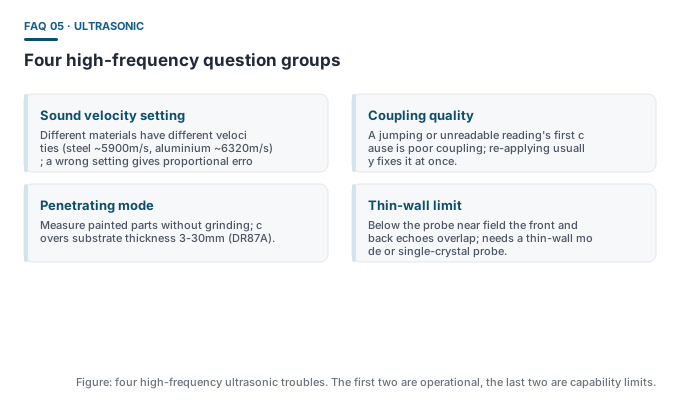
- Sound velocity — a wrong setting gives proportional error; the thicker the reading, the larger the absolute deviation (measure a 100mm part with a 2% velocity error and you are off by 2mm). Back-calculate velocity from a same-material block of known thickness.
- Coupling — the prime cause of jumping or unreadable readings. Re-applying couplant often pinpoints the problem immediately; it is the fastest check.
- Part — rough surface, internal rust, internal defects or thickness below the lower limit make the echo itself unreliable. That is a capability limit, not an operating issue.
The first two are operationally controllable; the third is a selection issue. When you cannot tell on site, measure a same-material block of known thickness once — block normal but part abnormal means the problem is in the part.